
In a landmark transaction that has sent shockwaves through the global entertainment and technology sectors, Electronic Arts, the venerable video game publisher behind iconic franchises like FIFA (now FC), Battlefield, and The Sims, has confirmed its acquisition by a powerful consortium of investors. The deal, valued at approximately $55 billion, stands as the largest all-cash sponsor take-private investment in recorded history, fundamentally altering the corporate structure of one of gaming's most enduring pillars. The investor group, comprising Saudi Arabia's sovereign wealth fund, the Public Investment Fund (PIF), the global technology investment firm Silver Lake, and the American firm Affinity Partners, has agreed to acquire 100% of EA's outstanding shares. This monumental shift, announced in late 2025 and expected to finalize in the first quarter of the 2027 fiscal year, marks the end of EA's era as a publicly traded entity on the NASDAQ, a status it has held for decades. The transaction's sheer scale is a testament to the perceived long-term value of interactive entertainment and intellectual property in the modern digital economy.
The financial mechanics of the deal are as colossal as its headline figure. EA stockholders are set to receive $210 per share in cash, a figure that represents a significant premium:
| Metric | Price | Premium Represented |
|---|---|---|
| Unaffected Share Price (Sept 25, 2025) | $168.32 | 25% |
| Unaffected All-Time High (Aug 14, 2025) | $179.01 | A premium to this historic high |
This lucrative offer was undoubtedly a key factor in securing stockholder approval. The funding structure is a complex tapestry of equity and debt: an equity investment of roughly $36 billion is being shouldered collectively by PIF, Silver Lake, and Affinity Partners, with each funding their portion from capital under their direct control. Notably, PIF is rolling over its existing 9.9% stake in EA into the new private ownership structure. The remaining $20 billion is debt financing, fully committed by JPMorgan Chase Bank, with approximately $18 billion expected to be drawn upon the deal's closure. This financial architecture is as meticulously engineered as the code behind a AAA game title, designed to support the company's ambitious future plans.
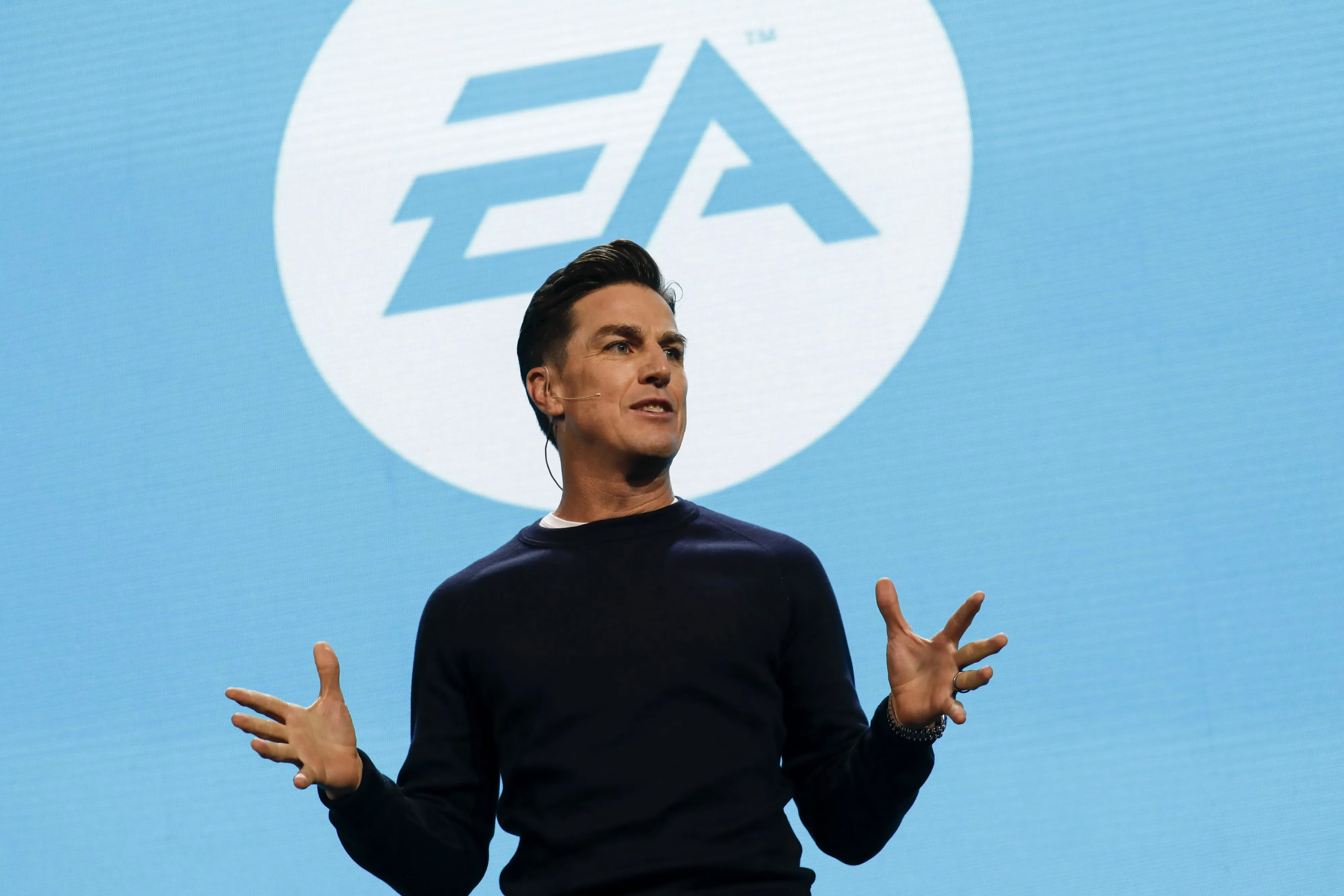
Despite this seismic change in ownership, leadership and operational direction are poised for continuity, a strategic move likely aimed at maintaining stability and creative momentum. Andrew Wilson, who has served as EA's CEO since 2013 and Chairman since 2021, will remain at the helm. In a statement, Wilson framed the acquisition not as an endpoint, but as a new beginning: \u201cThis moment is a powerful recognition of [our teams'] remarkable work... Looking ahead, we will continue to push the boundaries of entertainment, sports, and technology, unlocking new opportunities. Together with our partners, we will create transformative experiences to inspire generations to come.\u201d The company will also retain its headquarters in Redwood City, California, ensuring its core cultural and operational hub remains intact. For the workforce and development studios under the EA umbrella, this continuity is a beacon of stability in a turbulent corporate sea.
The timing of this acquisition is particularly striking, unfolding against a backdrop of major product launches and highly anticipated developments. The deal was announced just days before the release of Battlefield 6, a franchise crucial to EA's first-person shooter portfolio and its competitive stance against rivals like Call of Duty. It also follows closely on the successful launches of FC 26 and the revival of the beloved Skate series. Looking forward, EA's development pipeline remains robust and star-studded, with projects that read like a wishlist for gamers worldwide:
-
Mass Effect (BioWare): The next chapter in the acclaimed sci-fi RPG saga.
-
Star Wars Jedi 3 (Respawn): The continuation of Cal Kestis's story in the Star Wars universe.
-
Iron Man (Motive Studio): A single-player action-adventure game exploring the Marvel superhero.
This pipeline suggests the investor consortium is buying not just a company, but a treasure trove of valuable IP and creative potential, a vault of digital dreams waiting to be realized.
The composition of the buying consortium itself tells a story about the evolving landscape of global investment. The inclusion of Saudi Arabia's PIF underscores the nation's aggressive and long-term strategy to diversify its economy beyond oil, investing heavily in the future of entertainment, technology, and sports—a sector where EA, through its EA Sports division, is a global leader. Silver Lake brings deep expertise in scaling technology and media companies, having been involved with giants like Dell, Twitter, and Airbnb. Affinity Partners, the American firm founded in 2021 by Jared Kushner, adds another dimension, representing a newer but well-capitalized player in large-scale private equity. Together, they form a triad of financial power with distinct but complementary strategic interests, a triumvirate poised to steer EA into its next private chapter.
For the gaming industry and its observers, this deal is more than a financial transaction; it is a harbinger of a new era. The take-private model, shielding the company from quarterly earnings pressures and volatile public markets, could allow EA to pursue longer-term, riskier creative projects. This could be a boon for innovation, akin to a game developer finally receiving an unlimited resource cheat code, freeing them from the grind of micro-transaction-focused quarterly targets. However, it also raises questions about the growing influence of sovereign wealth funds in global culture and media. The acquisition is a definitive signal that video games are not merely a pastime but a foundational pillar of 21st-century entertainment and technology, an asset class as coveted and strategically important as prime real estate or energy reserves.
As the transaction moves toward regulatory and stockholder approvals, the eyes of the world are on Electronic Arts. The $55 billion price tag is a number that echoes through boardrooms and living rooms alike, a stark valuation of play, story, and digital community. With its leadership stable, its development slate full, and its new owners providing a war chest of private capital, EA stands at a unique inflection point. The company that brought Madden, Apex Legends, and Dragon Age to millions is now itself the protagonist in a story of corporate metamorphosis, its future chapters to be written away from the ticker tape and analyst calls, guided by the vision of its longstanding CEO and the deep pockets of its new private guardians. The game, as they say, has changed.